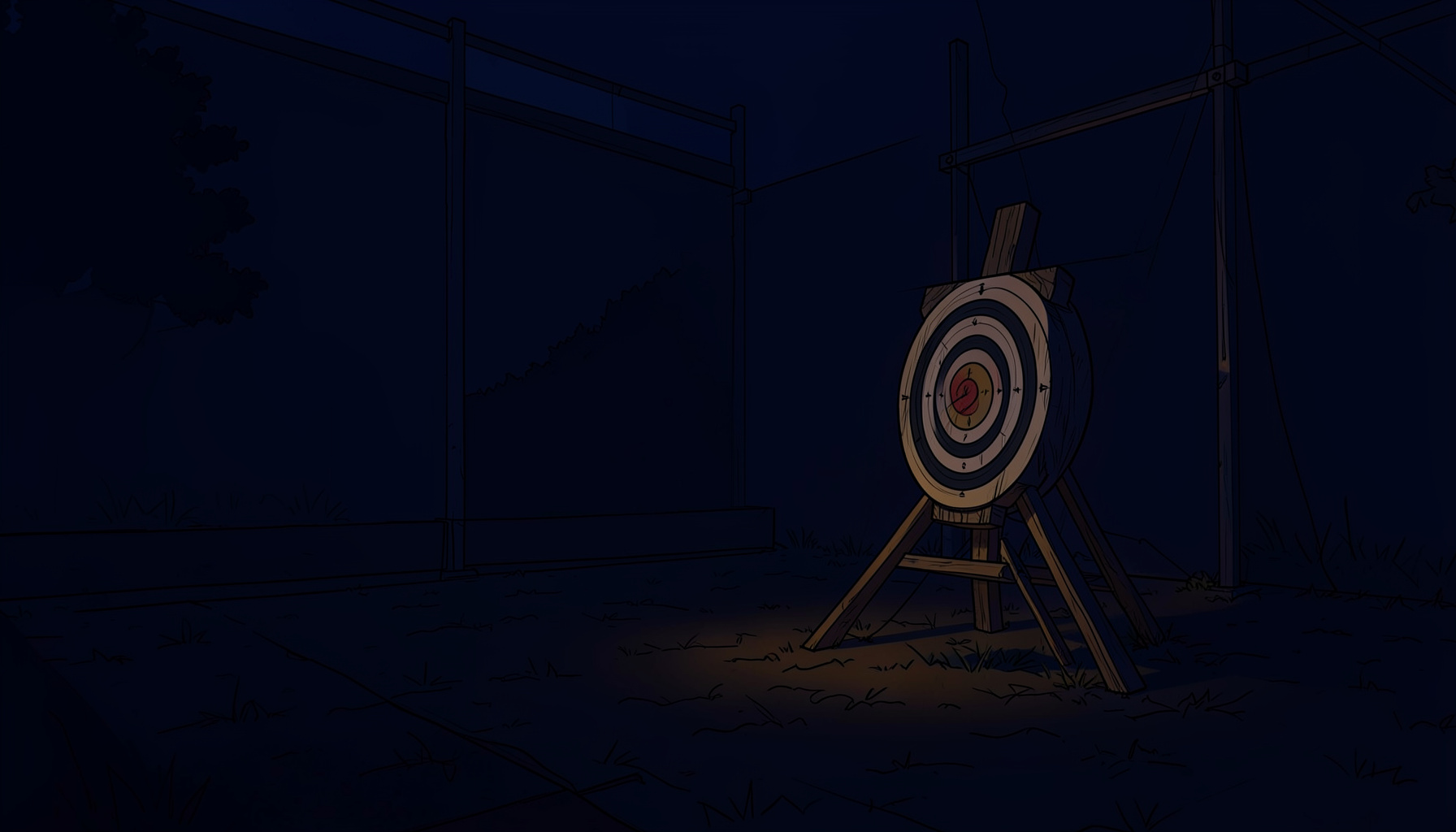
Archery and mindfulness: Sharpening focus one shot at a time
Archery asks for stillness and action at once. You settle, lift, draw, aim, release, and follow through while tracking the target, equipment, wind, and your own breathing. If attention drifts, a small change in posture or timing can send the arrow off course.
Mindfulness in archery is not about removing nerves or reaching a blank mental state. It means noticing the present with enough clarity to act: a relaxed jaw, stable shoulder, measured breath, and clear visual focus. These cues help an archer return to useful action rather than dwell on the last score.
For beginners, that awareness supports safe setup and sound habits. For experienced competitors, it keeps a repeatable process available under pressure. The same principles apply across traditional, recurve, compound, field, and 3D target archery, even though each discipline asks for different adjustments.
Inseme Cargese, based on Corsica’s coast, brings together training, social gatherings, competitions, and regional events, with guidance on technique, safety, and equipment. Its multidisciplinary club culture offers a useful model for Australian archers who want mental skills to reinforce—not replace—good coaching.
Attention before the draw
Before the bow rises, attention needs a direction. Rather than forcing a blank mind, notice stance, hand placement, breathing, and the target’s centre. A short comparison shows how ordinary distractions can be translated into practical cues.
| Drifting routine | Mindful cue | Result |
|---|---|---|
| Rushing the setup | Pause with both feet grounded | A steadier starting position |
| Gripping too tightly | Relax the fingers and jaw | Less tension through the draw |
| Chasing the previous score | Return attention to the next target | Clearer visual focus |
| Holding the shot too long | Use one measured exhalation | A controlled release |
Use the cue as an anchor, not a command to become perfectly still. Nerves may remain, but the archer can still choose a slow exhalation, a clear gaze, and one consistent sequence. That sequence creates room for composure and accurate release.
Match mindfulness to your discipline
Different bows reward different kinds of attention. A range of bow disciplines at Inseme Cargese includes traditional, recurve, compound, field, and 3D target archery. In each case, mindfulness means tracking relevant sensations rather than imposing the same feeling on every shot.
For a traditional bow, awareness may centre on finger tension and the smooth draw. With a compound bow, the archer can monitor a level release, trigger control, and follow-through. In field and 3D shooting, rapid target identification and varied ground conditions require an even more flexible attention.
Build a repeatable focus routine
A focus routine works best when it is short enough to use between arrows and rich enough to settle the nervous system.
Body awareness cues
- Feel both feet grounded before lifting.
- Exhale slowly without flattening the chest.
- Relax the drawing hand and jaw.
- Keep the string hand clear.
Choose one cue per stage instead of trying to monitor everything at once. The aim is coordination under a narrower field of attention.
Visual attention cues
- Look through the sight, not at its housing.
- Hold the target centre in your mind.
- Notice the arrow’s line before release.
After each shot, return to the next setup without judging the previous one. This reset prevents self-criticism from consuming the attention needed for the following arrow.
Balance the body and the breath
Physical balance and mental focus are closely connected. The explanation of why bow balance matters shows how equipment alignment can reduce unnecessary movement; stable equipment lets the archer spend less effort correcting position.
Breathing should support the draw cycle rather than interfere with it. Try a comfortable inhale before setting, a gentle exhale while coming to full draw, and a quiet release that preserves the follow-through. If the shoulders rise or the bow hand shifts, simplify the cue and repeat.
Read Australian shooting conditions
Australian shooting locations add useful sensory detail. Many suburban clubs around Sydney and Melbourne operate on parkland ranges, where eucalyptus trees, birds, traffic, and uneven grass compete for attention. Metric distances are standard for target events, while field rounds demand attention to wind, slope, and vegetation.
Conditions can shift quickly. A sea breeze across a Perth range may alter arrow flight, an Adelaide summer session may arrive with intense heat, and Melbourne’s changeable weather can move from sunshine to squalls between ends. Reading those signs is part of shot craft, not a distraction from it.
Sporting retailers across Australia stock recurve and compound equipment, strings, sights, stabilisers, and target supplies, but the local club remains a key source of practical advice. Before travel, check target faces, arrow labels, draw weights, and field rules so unfamiliar setup does not consume mental energy.
Carry focus into travel and events
Regional competitions extend mindfulness beyond the practice range. Travel adds noise, disrupted sleep, unfamiliar lanes, and changing light, so the archer should rehearse the same short routine in several settings rather than saving it for match day.
For clubs taking juniors or families to a country event, accommodation and supervision deserve the same care as equipment. The practical points in this away-game travel guide can be adapted for Australian motels, clubhouses, and regional tournaments, with safe transport times planned around the draw and recovery.
Measure attention as a skill
Turn concentration into something observable. A session log can record whether attention stayed on the target, when tension entered the drawing hand, and whether the pre-shot routine remained consistent. These observations reveal patterns without turning every arrow into a judgement.
The practical takeaway is to treat one repeatable pre-shot cue as the anchor for the whole session. Pair it with measured breathing and a quiet follow-through, then record what stayed steady. Over time, that deliberate attention becomes composure, and composure becomes the foundation of a more consistent shot.