How to practise archery indoors during bad weather
Rain, strong winds and winter storms can interrupt an outdoor archery routine, but they do not have to stop progress. An indoor session can develop posture, release control, aiming discipline and strength, even when there is no room for a full-distance target range.
For archers in Australia, indoor practice is particularly useful during wet weekends in Sydney, Melbourne or Hobart, and during periods of extreme heat when outdoor activity is uncomfortable. With a safe layout, suitable equipment and realistic goals, a garage, shed or spacious room can become a valuable training area.
| Indoor situation | Suitable practice | Main benefit |
|---|---|---|
| Limited distance | Blank-bale shooting | Improves form and release |
| Very little space | Stretch bands and movement drills | Builds strength and coordination |
| No target wall | Close-range target work | Refines aiming |
| Shared household area | Mental rehearsal and equipment care | Maintains routine safely |
| Larger garage or hall | Short-distance shooting | Adds structure and scoring |
Choose a safe indoor space
The safest indoor area has a solid backstop, enough clearance and no people moving through it. A purpose-made archery net or layered foam target is preferable to improvised materials. Avoid shooting towards plasterboard, glass, thin timber, doors or anything that could allow an arrow to pass through.
Measure the shooting lane before drawing the bow. Include space behind the target, room for the archer to stand comfortably and a clear zone beside the line. Remove pets, toys, tools and loose objects. In a typical Australian garage, bicycles, storage boxes and shelving can create hidden hazards, so the area should be cleared before every session.
Check local rules as well. Archery regulations and council requirements can vary between states and municipalities, while apartment buildings and rented properties may have additional restrictions. Never shoot in a shared driveway, communal car park or public park unless the site is specifically approved and supervised for archery.
Select drills that suit the distance
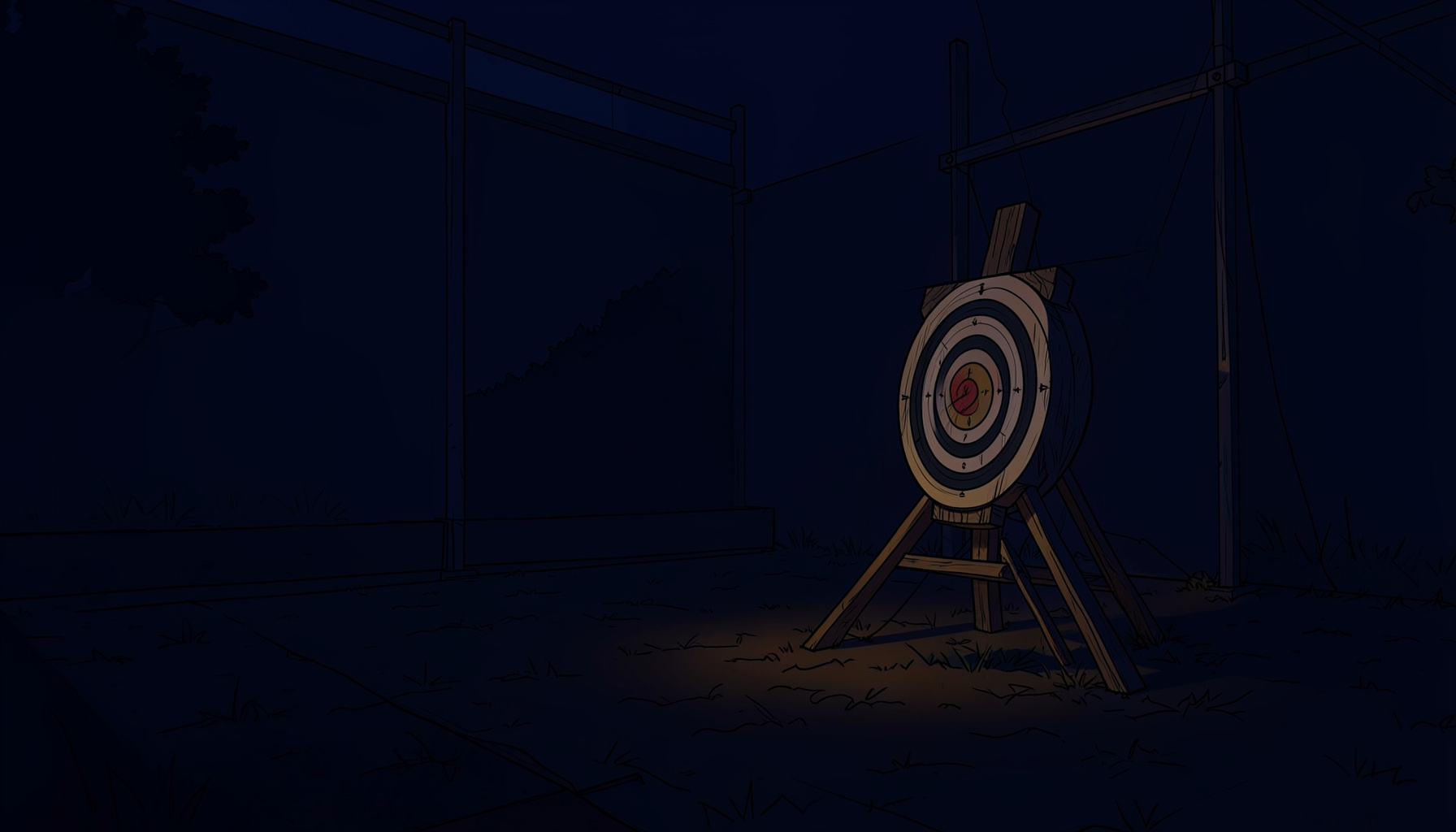
Blank-bale practice is one of the most useful indoor methods. Stand close to a safe target without using a face, then focus on a relaxed grip, consistent anchor point, straight bow arm and smooth release. Because there is no scoring pressure, the archer can notice movement that would otherwise be hidden by concentration on the gold.
A resistance band or stretch cord can replicate parts of the draw cycle without firing an arrow. Practise setting the shoulders, drawing to the anchor, holding briefly and letting the hands move naturally through the release. Archers using compound bows should follow their coach’s advice, since draw length, let-off and safe handling differ from recurve and traditional equipment.
Experienced archers can add mirror work, slow-motion movement drills and short blank-bale ends. A mirror should be positioned safely to the side rather than behind the target. Archers interested in bow history may also enjoy the careful restoration mindset found in antique racing communities, where close attention to equipment and craft matters as much as performance.
Adjust equipment for home training
Indoor practice often needs lighter or shorter equipment. A lower draw weight can reduce fatigue when shooting at close range, while a lightweight training bow may be more suitable for a narrow room. Arrows must still match the bow and be long enough for the archer’s draw length; using unsuitable arrows creates a serious safety risk.
Foam targets, archery nets, stretch bands and finger tabs are widely available through Australian specialist retailers and sporting suppliers. Some archers buy used bows through local clubs or online marketplaces, but second-hand equipment should be inspected for limb cracks, damaged strings, loose fittings and worn cams before use. A qualified coach or pro shop can identify faults that are easy for a beginner to miss.
Indoor sessions are also a good time to wax the string when appropriate, inspect nocks, check arrow fletchings and record brace height. Keep equipment dry, away from direct heat and out of reach of children. A damp coastal home in places such as Coffs Harbour or Cairns may require extra attention to rust and moisture storage.
Build a focused training routine
A useful home session can last 25 to 45 minutes. Begin with shoulder, wrist and upper-back mobility, then complete several slow draw-and-hold repetitions. Follow with blank-bale ends, close-range target ends or band drills. Finish with a short equipment check and notes about what felt consistent or unstable.
Use a clear training objective rather than simply shooting as many arrows as possible. One session might focus on keeping the bow shoulder low; another might examine release tension or follow-through. Stop when technique deteriorates. Fatigue can encourage collapsing posture, gripping the bow too tightly and rushing the shot.
A training diary helps connect indoor work with outdoor results. Record bow type, draw weight, distance, number of arrows and one technical observation. When weather clears, compare those notes with field, 3D or target performance. Club sessions and regional activities listed in the events calendar can provide useful examples of how structured practice leads into organised shooting.
Keep the club connection active
Indoor training should support, rather than replace, supervised coaching and social practice. Beginners benefit from feedback on stance, nocking, drawing and release before repeating drills alone. Experienced archers can use club contact to test equipment changes and discuss discipline-specific technique.
Traditional, recurve, compound, field and 3D archery each demand different skills. A close-range garage session may improve release control, but it cannot fully reproduce uneven ground, changing distances, wind reading or competition pressure. Learning more about a club’s approach through its club information can help archers understand the value of coaching, safe facilities and shared experience.
For an Australian archer facing a stormy weekend, the practical formula is simple: clear a controlled space, use a proper backstop, choose a modest drill and stop before fatigue affects technique. A short, safe indoor session is enough to preserve consistency until the next outdoor shoot.